
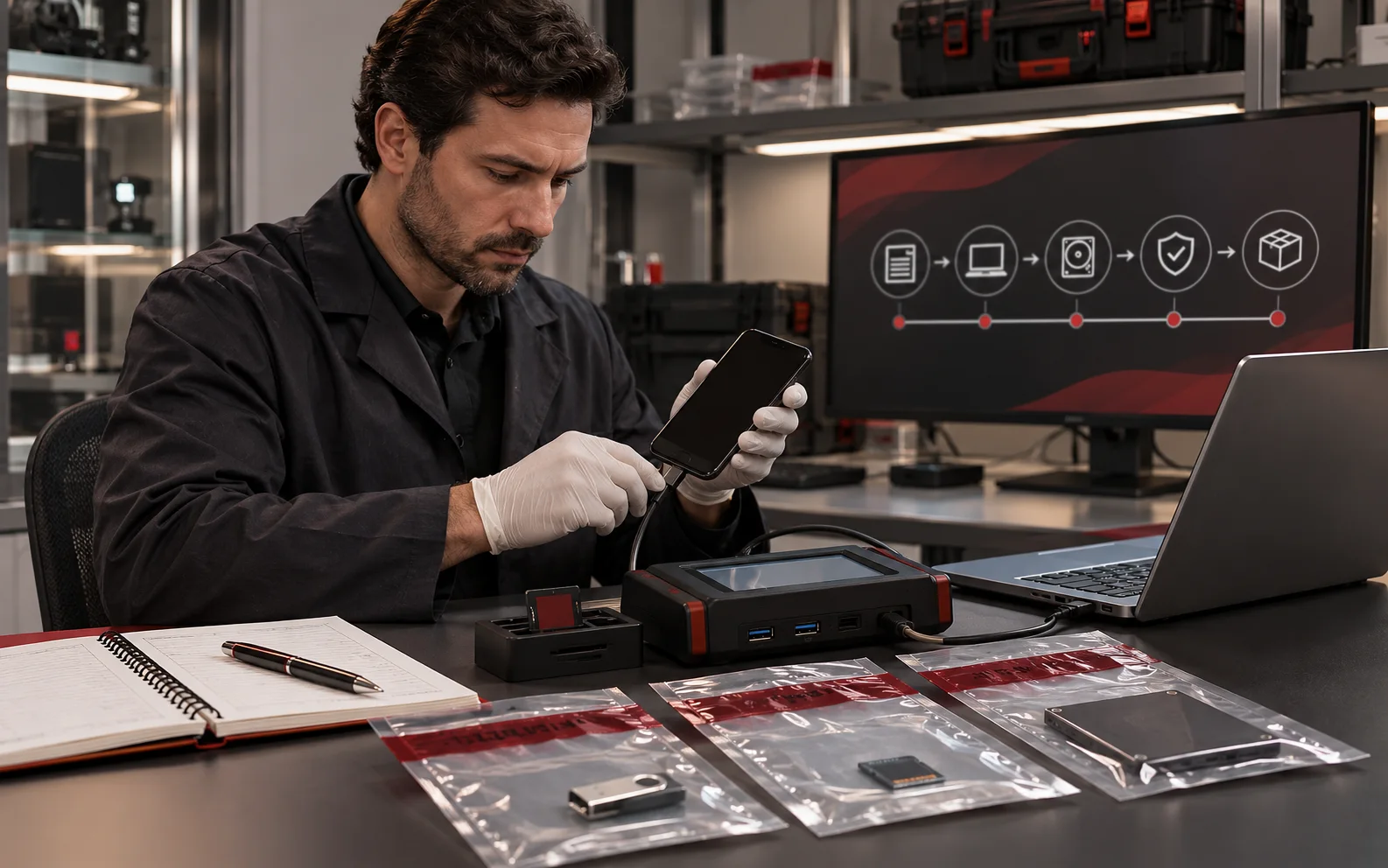
Preserve digital evidence before it changes or disappears
Cybercrime evidence can be fragile. A device may continue writing new data, an online account may change, logs may expire, and a remote user may delete information. Early digital evidence collection helps preserve relevant sources in a controlled way before routine activity or an intentional act alters what is available.
The process begins by identifying the question to be answered, the systems or accounts that may contain evidence, and the legal authority for collection. A focused plan can reduce unnecessary access to personal or business information while ensuring important devices, cloud sources, messages, records, and logs are not overlooked.
Collection designed for integrity and repeatability
When appropriate, forensic imaging creates a working copy while protecting the original source. Cryptographic hash values can be used to confirm that collected data remains unchanged. Examiners document the device or account, date and method of collection, tools used, people involved, and each transfer or storage event in the chain of custody.
Sources that may contain cybercrime evidence
- Computers, mobile phones, tablets, drives, and removable media
- Email, cloud storage, collaboration platforms, and online accounts
- Server, firewall, application, access, and security-system logs
- Web pages, social media, messages, images, video, and metadata
A documented foundation for analysis
Collection is different from interpretation. The first objective is to preserve data reliably and record where it came from; analysis can then search for relevant activity, recover available artifacts, build timelines, and compare information across sources. Keeping those stages clear helps findings remain traceable to the underlying evidence.
Deliverables may include forensic images, verified exports, source inventories, collection notes, chain-of-custody records, and an evidence preservation report. Whether the matter involves unauthorized access, online threats, fraud, theft, or a business dispute, careful cybercrime digital evidence collection provides a defensible starting point for the investigation.
FAQ'S
Cybercrime Digital Evidence Collection is a focused professional service used to examine relevant facts, records, devices, activity, or other available evidence and produce clear, supportable findings.
Consider Cybercrime Digital Evidence Collection when important facts are disputed, evidence may be lost, or you need an independent assessment before making legal, business, or personal decisions.
Useful evidence for Cybercrime Digital Evidence Collection may include original files, devices, messages, photographs, account notices, documents, dates, names, and a concise timeline of events.
The process begins with a confidential consultation, followed by scope definition, evidence preservation, authorized examination, analysis, and delivery of the agreed findings.
Timing depends on the amount and condition of the evidence, the questions being examined, access requirements, and urgency. A practical estimate is provided after the initial review.
Yes. Information connected with Cybercrime Digital Evidence Collection is handled discreetly and shared only with authorized people, subject to the engagement terms and applicable law.
Findings may support an attorney, insurance matter, internal decision, or legal proceeding when the scope, methods, documentation, and evidence handling are appropriate for that purpose.
Cost depends on scope, evidence volume, complexity, urgency, and the required deliverables. Fees and authorization are discussed before substantive work begins.
Deliverables may include a written report, evidence inventory, timeline, technical findings, supporting records, or another agreed work product with relevant limitations stated clearly.
Contact our office with the essential facts, your objective, available evidence, and any deadline. We will explain the appropriate next step and whether the matter fits our services.
Need Clear, Confidential Guidance?
Tell us what happened and what evidence is available. We will explain whether an investigation or forensic review is appropriate.