Computer forensics that starts with a clear question
A computer can hold years of files, messages, browser activity, account records, and system events. That does not mean every file needs to be opened. A useful computer forensics examination begins with a simple question: what happened, when did it happen, and which device or user activity may help explain it?
We narrow the work to the devices, dates, user profiles, applications, and file types that matter to the case. This focused approach protects unrelated information and keeps the analysis tied to the reason you requested it. Depending on the facts, the examination may look for deleted files, document access, file transfers, internet history, login activity, connected USB devices, or signs that data was copied or removed.
Preserving the original evidence
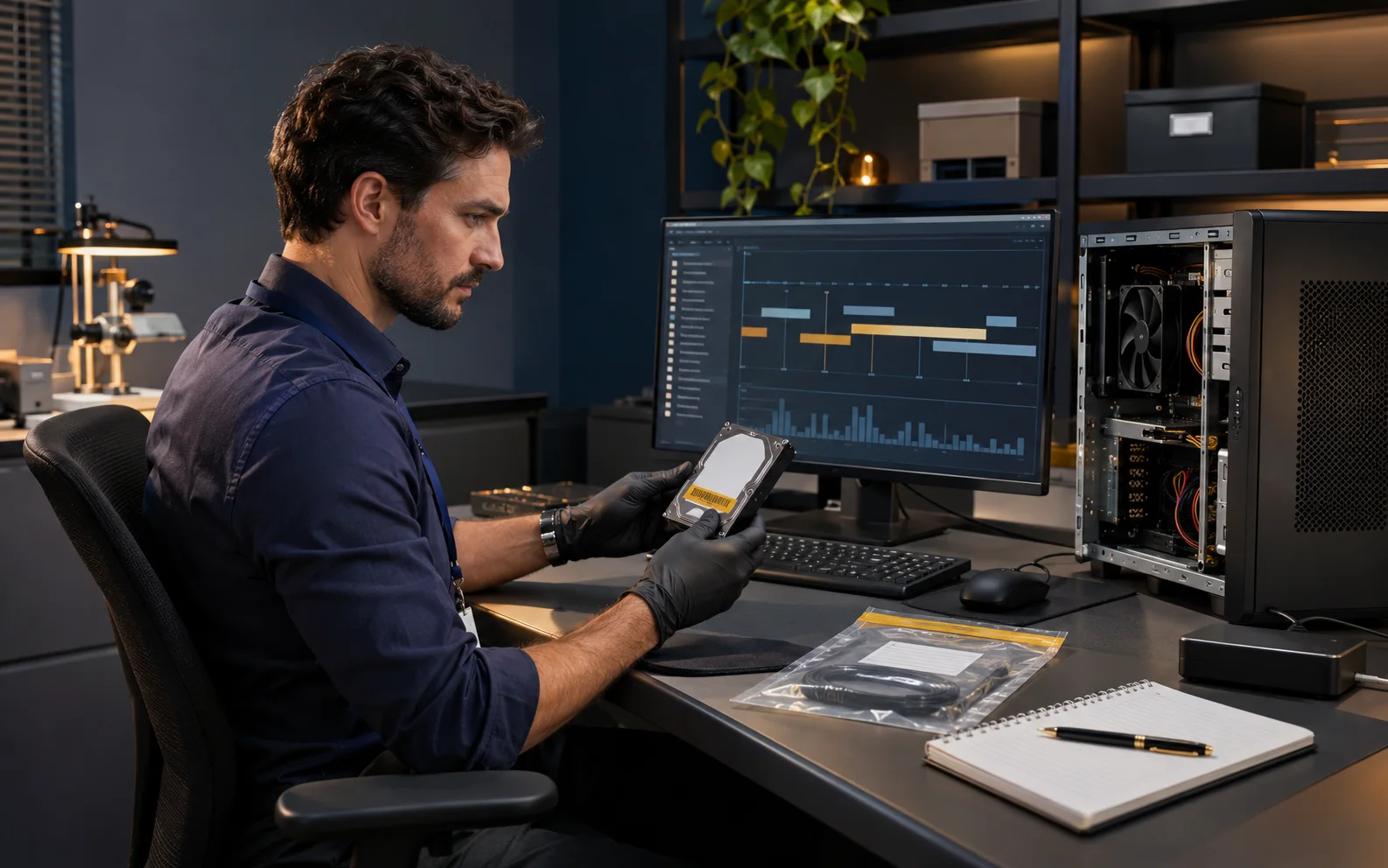
Whenever appropriate, the original computer is preserved and the analysis is completed from a documented forensic copy. This reduces unnecessary changes to the source device. We record how the data was collected, note any technical limits, and keep the work organized so an attorney, business owner, or client can understand where a finding came from.
Evidence we may examine
- Deleted files, folders, and document metadata
- Browser history, downloads, and application activity
- User logins, USB connections, and system events
- Email, cloud, and account artifacts available on the computer
Clear findings without unnecessary technical language
Digital evidence is only useful when it is explained in context. Our computer forensics findings may include a timeline, relevant artifacts, supporting screenshots or records, and a plain-language explanation of what the evidence supports. We also identify missing information, reasonable alternative explanations, and limits that could affect the conclusion. The goal is a careful answer you can discuss with counsel or use to make an informed next decision—not a pile of technical data without meaning.
Computer Forensics FAQs
Computer Forensics is a focused professional service used to examine relevant facts, records, devices, activity, or other available evidence and produce clear, supportable findings.
Consider Computer Forensics when important facts are disputed, evidence may be lost, or you need an independent assessment before making legal, business, or personal decisions.
Useful evidence for Computer Forensics may include original files, devices, messages, photographs, account notices, documents, dates, names, and a concise timeline of events.
The process begins with a confidential consultation, followed by scope definition, evidence preservation, authorized examination, analysis, and delivery of the agreed findings.
Timing depends on the amount and condition of the evidence, the questions being examined, access requirements, and urgency. A practical estimate is provided after the initial review.
Yes. Information connected with Computer Forensics is handled discreetly and shared only with authorized people, subject to the engagement terms and applicable law.
Findings may support an attorney, insurance matter, internal decision, or legal proceeding when the scope, methods, documentation, and evidence handling are appropriate for that purpose.
Cost depends on scope, evidence volume, complexity, urgency, and the required deliverables. Fees and authorization are discussed before substantive work begins.
Deliverables may include a written report, evidence inventory, timeline, technical findings, supporting records, or another agreed work product with relevant limitations stated clearly.
Contact our office with the essential facts, your objective, available evidence, and any deadline. We will explain the appropriate next step and whether the matter fits our services.
Need Clear, Confidential Guidance?
Tell us what happened and what evidence is available. We will explain whether an investigation or forensic review is appropriate.